
6 days, 3 cantons, one mountain lake per day: That’s the Gotthard Crystal Trek
Andermatt, June 22, 2026
Few people, many mountain lakes. Alpine scenery, cosy mountain huts. In this interview, long-distance walker and author Christina Ragettli explains why the Gotthard Crystal Trek is an absolute must on any ‘must-do list’ of Swiss long-distance walks.
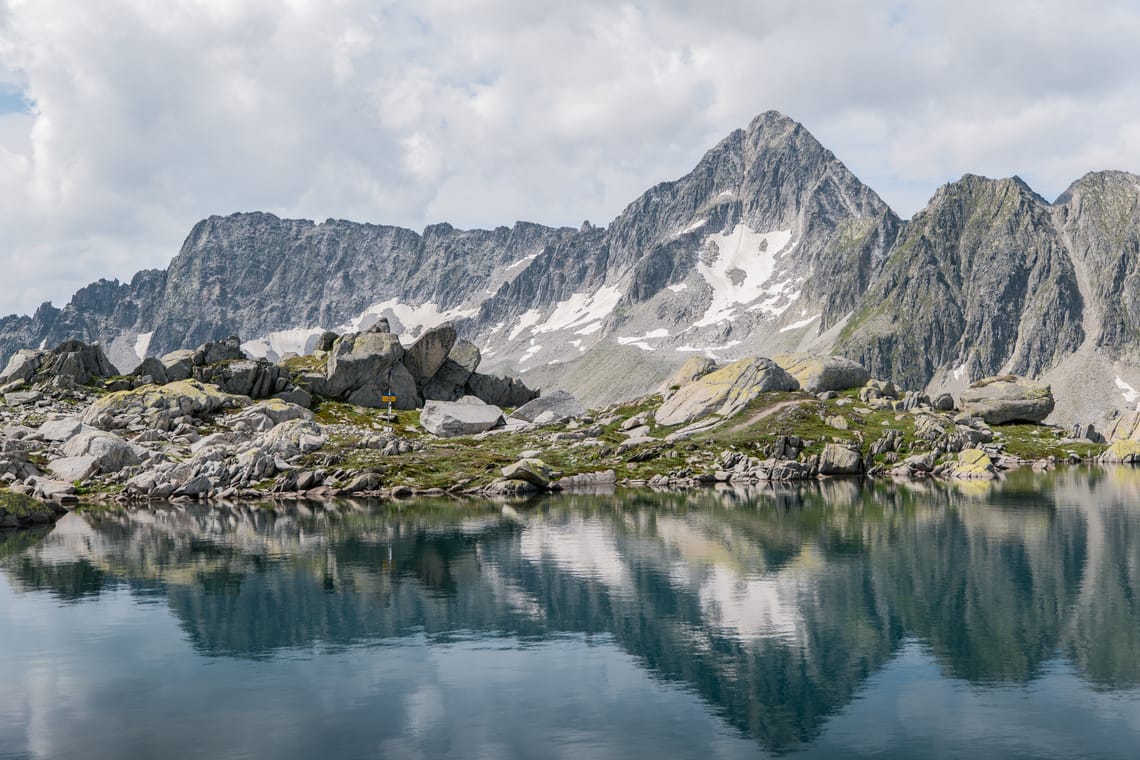
Crystal-clear mountain lakes and secluded landscapes characterise the Gotthard Crystal Trek.
Christina, you’ve become one of the leading voices in the Swiss hiking scene. What does a long-distance hike need to have for you to consider it perfect?
I have a clear idea about that. Most importantly, I appreciate having peace and quiet whilst hiking, being able to recharge my batteries in nature, and not having to follow Instagram hotspots. Then there are plenty of mountain lakes. Jumping into cold water every day really makes me very happy, especially on hot summer’s days. But characterful mountain huts, run with passion, are also a must. The landscape can happily be alpine, a bit barren and rugged. Ideally with a touch of adventure – so perhaps a section of trail marked in blue and white, for a bit of adrenaline. Bonus: good public transport links make it all so straightforward. And because I find Switzerland so incredibly beautiful, I love exploring the Alps right on my doorstep, without long journeys or even flights abroad. For me, exploring my home – by which I mean the whole of the Alps – holds an incredible appeal!
Is there a route that meets these criteria exactly? Do you have any tips for anyone else who feels the same way?
Yes, absolutely: the new Gotthard Crystal Trek. Spanning 6 stages, it covers 87 kilometres and just under 7,000 metres of elevation gain from Andermatt to the Oberalp Pass. The route passes through the cantons of Uri, Ticino and Graubünden, right through the regions of Andermatt, Sedrun and Disentis. You’ll hike over secluded passes, past countless mountain lakes, spend the night in charming mountain huts and encounter very few other walkers. The name ‘Kristall’ is no coincidence: the region is famous for its rock crystals, and time and again I spotted small crystals right by the footpath. What’s more, the water in the mountain lakes glistens so crystal-clear that the name is doubly fitting. Travelling by public transport directly to Andermatt is very straightforward, as is the return journey from the Oberalp Pass.
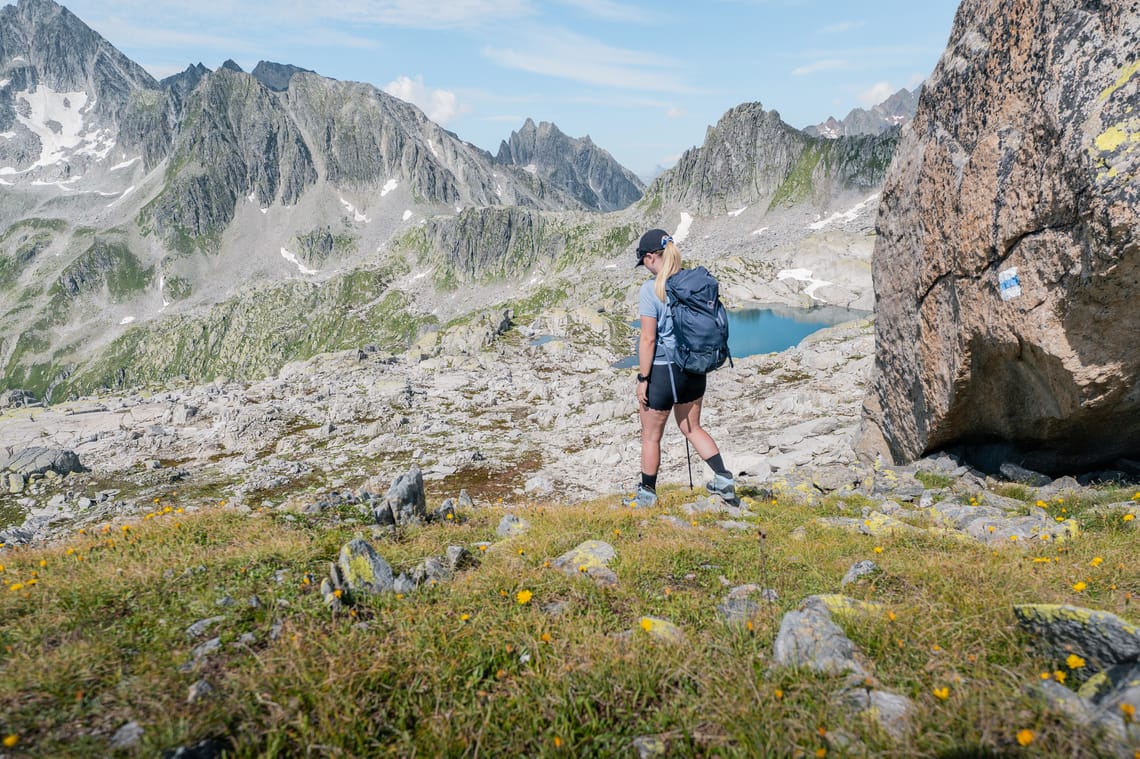
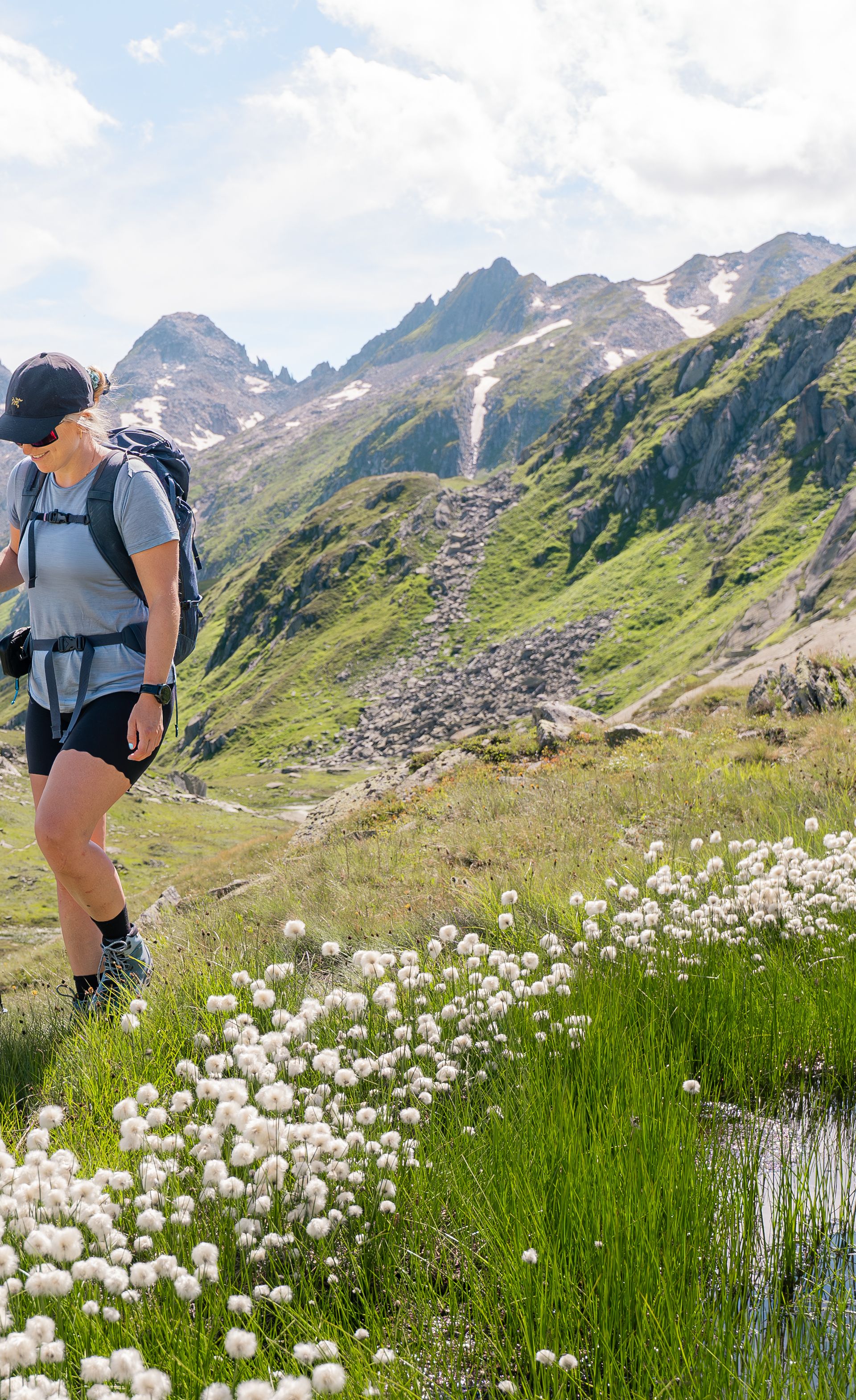
The route takes you over remote passes, past countless mountain lakes and impressive rocky landscapes.
What was your favourite stage and why?
That’s a tough one – I can hardly decide. I have particularly fond memories of the second stage, from the Gotthard Pass to the Vermigel Hut. The highlight of this stage is the ‘Vorderi Loch’ at over 2,600 metres: three turquoise-blue mountain lakes, nestled amongst boulders, with patches of snow still on the shores at the time and not a soul in sight. Of course, I had to go for a swim there!
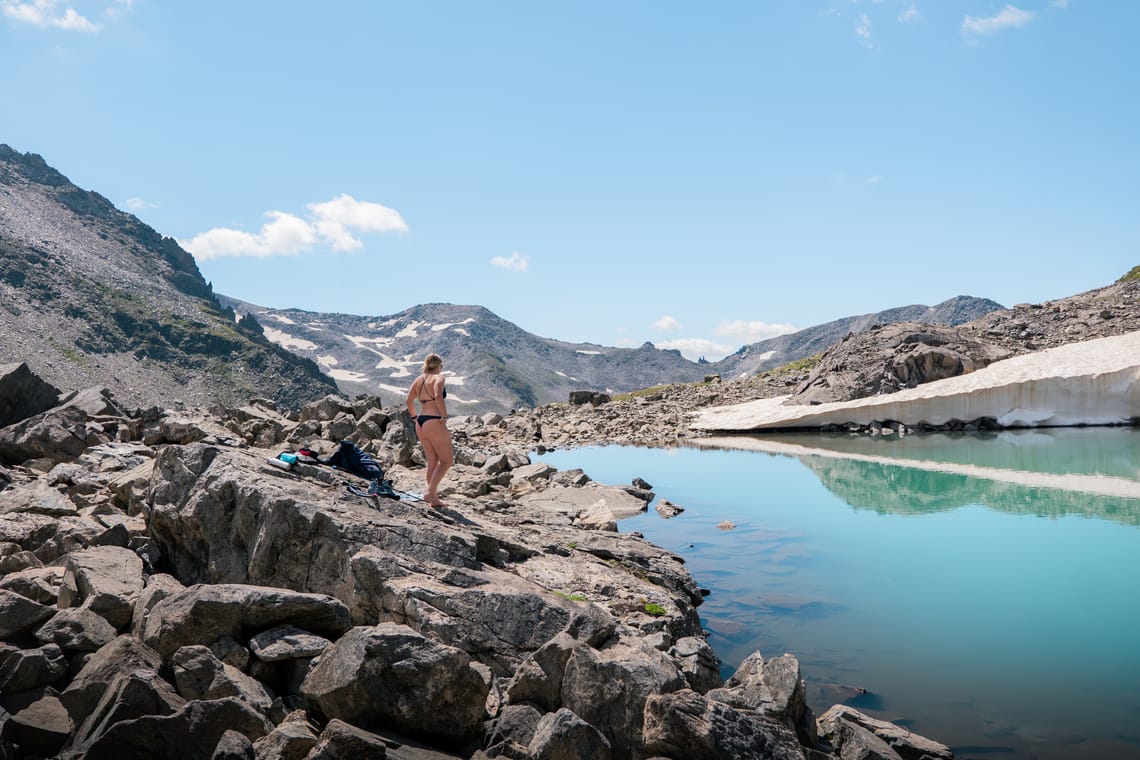
Only for the brave: a dip in the ice-cold waters of a high-alpine lake.
Stage 4, featuring the Lake Hexen ‘Lai dalla Stria’ and the Etzli Hut – complete with a hot tub – lies just beyond. Another big plus point for me at the Etzli Hut is not only the delicious food and the incredibly warm hospitality, but also Findus, the hut’s cat.
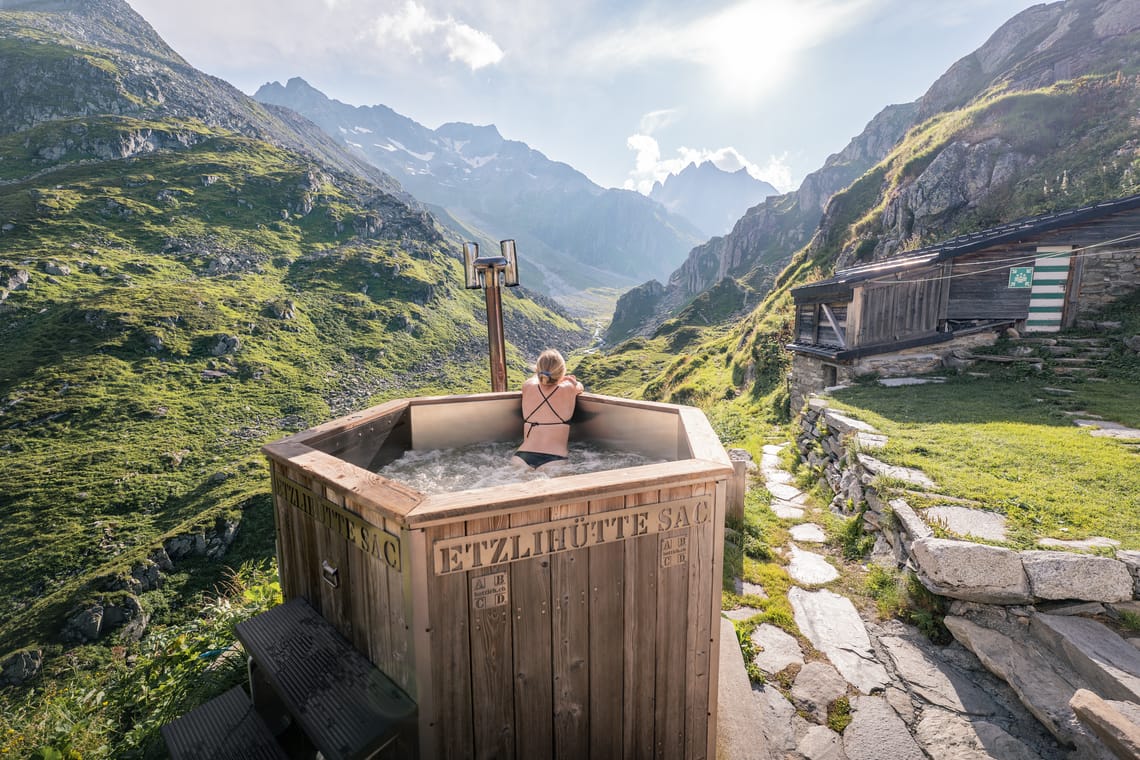
Relaxation after a long day’s hike: a hot tub with a view at the Etzli Hut.
Info: The Etzli Hut will be open to day visitors in summer 2026. Overnight stays are not possible due to hut renovation work. It is therefore advisable to hike as far as the Tresch Hut in summer 2026.
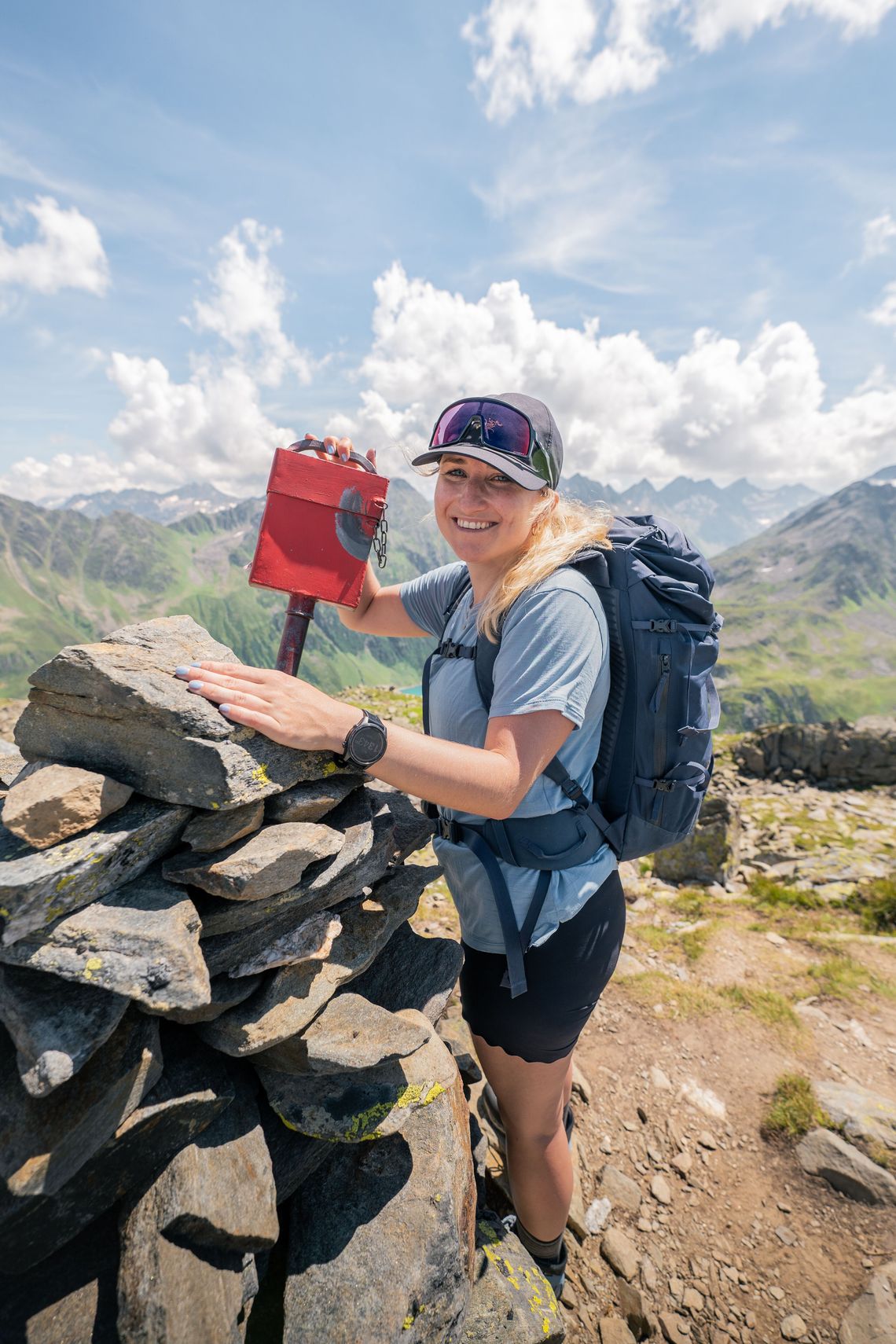
As a third highlight, I’d also mention the adventurous detour to Piz Cavradi above the Maighels hut.
When is the best time for the trek?
Depending on snow conditions, from early July to late September. Before then, there’s often still too much snow on the mountain passes; this would be particularly undesirable on the blue-and-white sections. Although it’s warm in high summer, the mountain lakes reliably cool you down after a strenuous day. I hiked the route during the Swiss summer holidays and yet you hardly noticed it. You hike away from the hustle and bustle on beautiful paths.
What do you need to bear in mind, and what mustn’t be missing from your rucksack under any circumstances?
You need to be in good physical condition and should feel comfortable on alpine terrain. Some sections are marked in blue and white (T4) and are perfectly manageable with a bit of experience. They aren’t very demanding. At most, finding your way – for example, if there’s fog – is a bit more challenging. However, with a good map app and route data downloaded in offline mode, even that’s hardly a problem. As you’ll be spending the nights in mountain huts, I’ve packed my hut sleeping bag and my lightweight e-book reader in my rucksack. You should also bring your swimwear (though you can, of course, go ‘au naturel’) and plenty of sun cream! Good walking boots for the alpine sections, a reliable rain jacket and enough water for the longer stages are, of course, essential too.
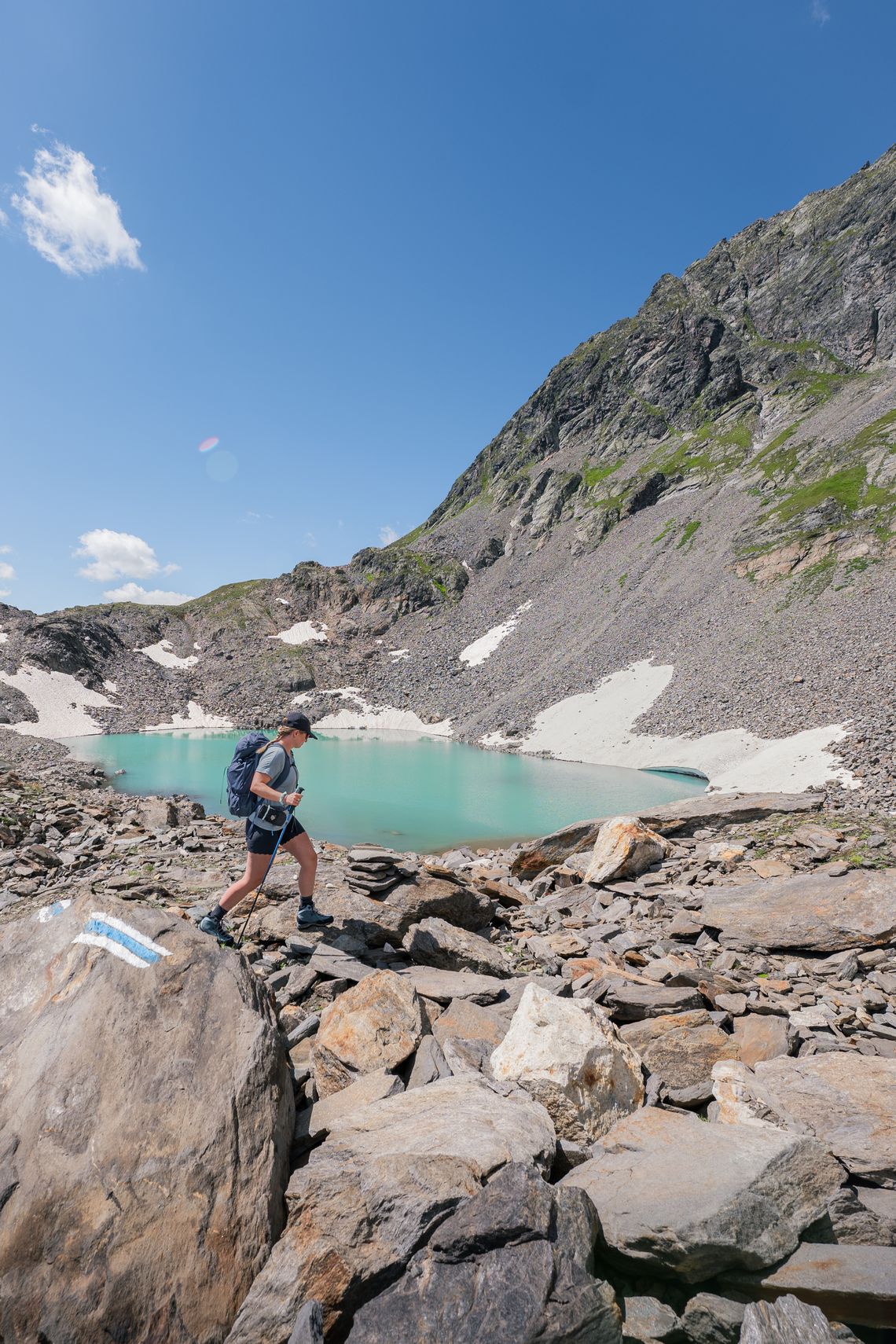
One mountain lake more beautiful than the next.
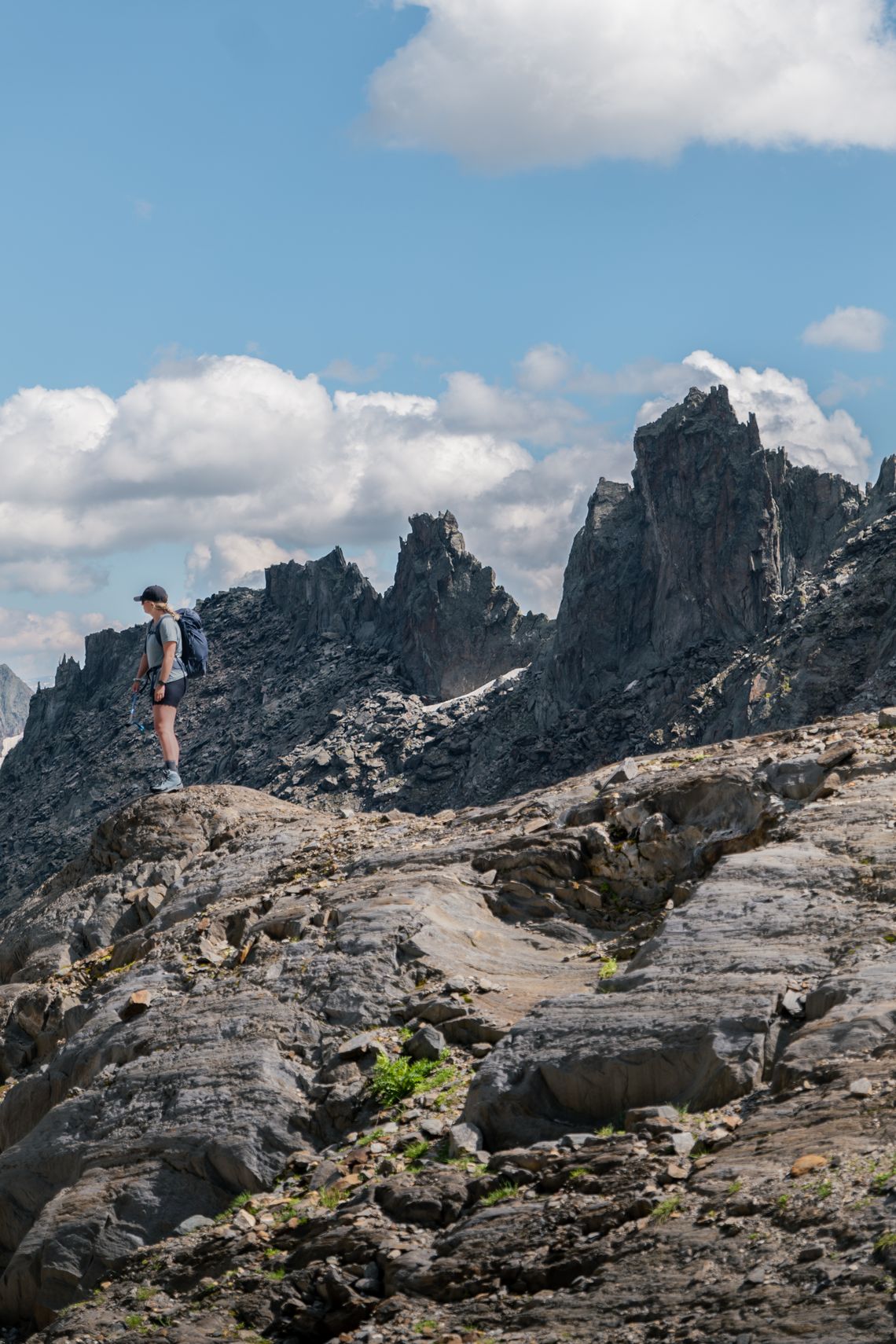
Rugged, wild and impressive.
And how does the trek end? What’s the first thing you do after six days of hiking?
The trek ends at the Oberalp Pass at 2,046 metres, by the only lighthouse in the Alps. It symbolises the source of the Rhine; its original counterpart can be found in Rotterdam, where the Rhine flows into the sea. The Rhine rises at the Oberalp Pass – or, to be more precise, at Lake Toma, above the Maighels hut. It’s quite fascinating to think that a raindrop falling at the Oberalp Pass flows into the sea in less than 30 days.
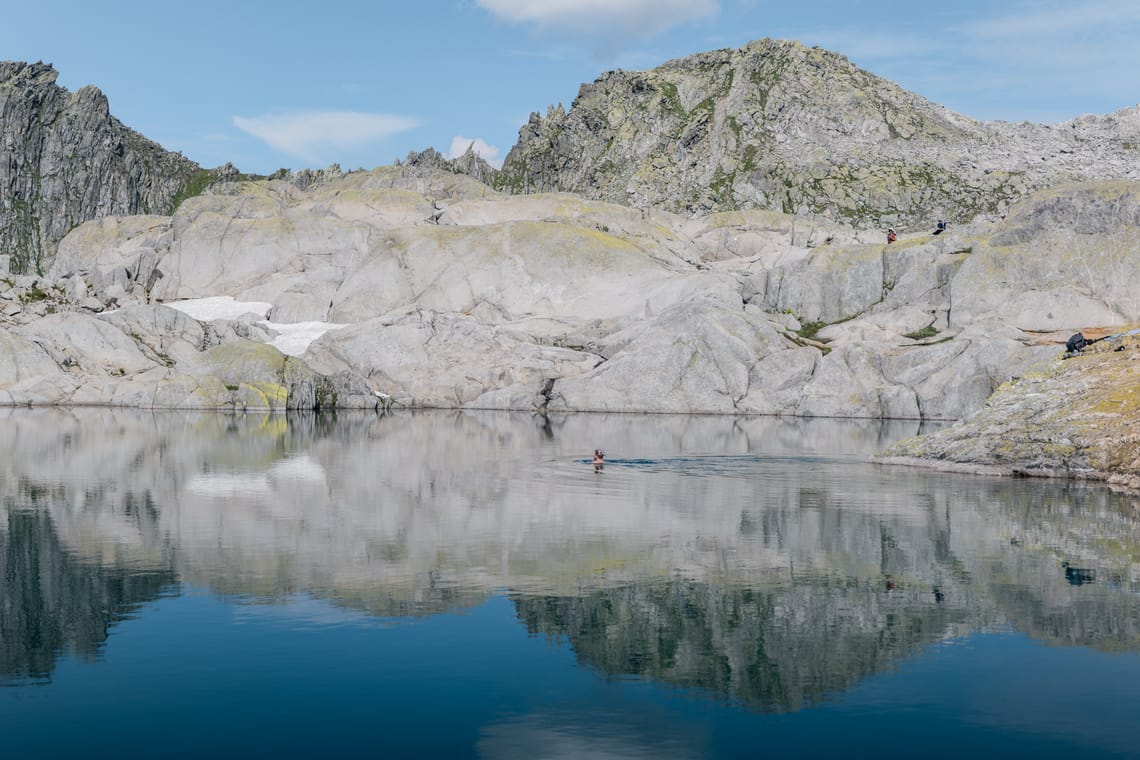
Peace and quiet, vast open spaces and crystal-clear water accompany hikers all the way to the Oberalp Pass.
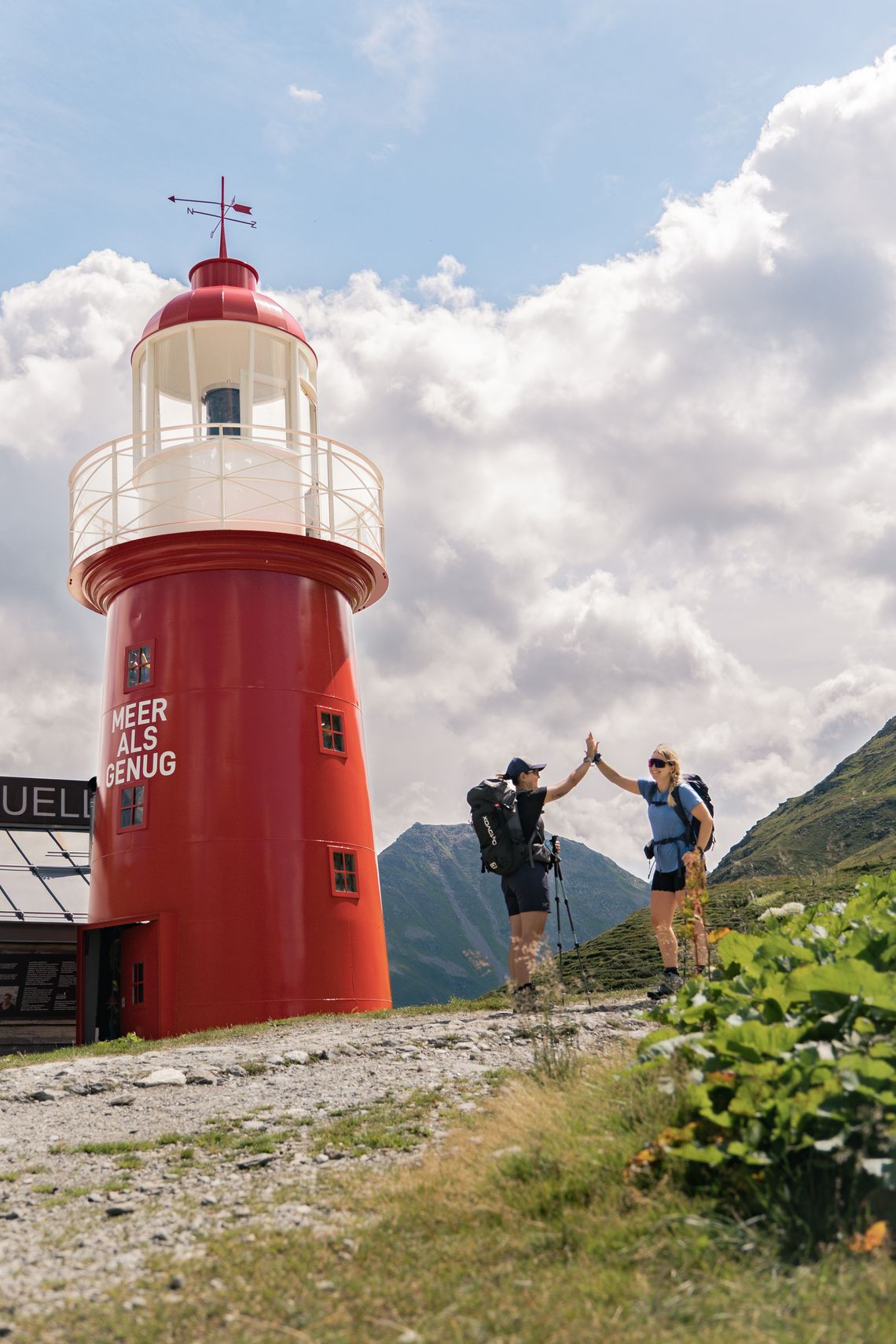
The lighthouse on the Oberalp Pass symbolically marks the source of the Rhine – and the end of the Gotthard Crystal Trek.
My first stop after the hike: the popular Alpsu restaurant right on the pass. Apparently, they serve the best homemade cream slice in the region – or so I’ve been told! After six days of hiking, you’ve definitely earned it. On the terrace, you have time once again to look back on the wonderful days spent hiking and plan your next hike straight away.